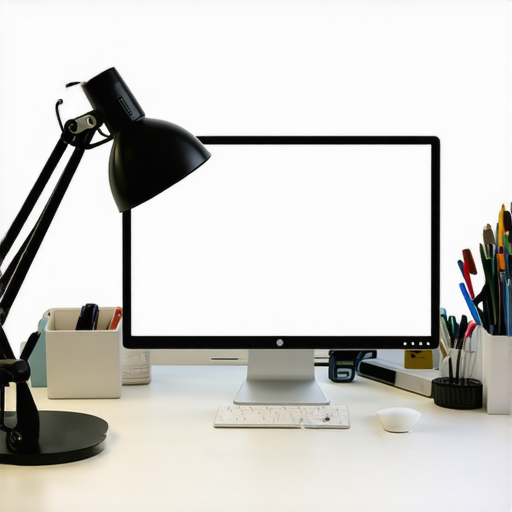
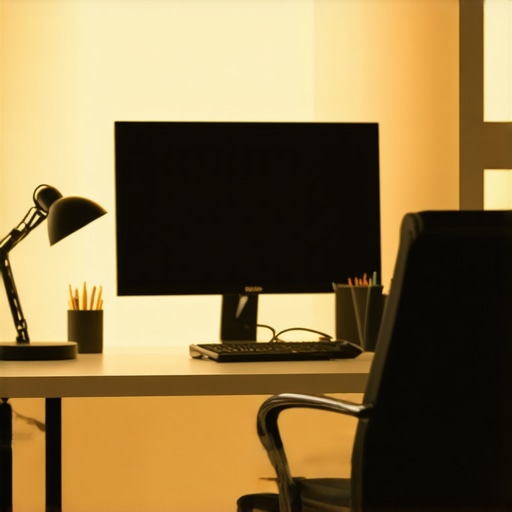
My Journey into Bias Lighting and Desk Lamps: A Personal Perspective
When I first started working from home, I underestimated the power of good lighting. My makeshift setup was functional but lacked the ambiance that could truly boost my productivity and comfort. It wasn’t until I experimented with various bias lighting ideas and desk lamps that I realized how much lighting influences my mood and focus.
One evening, I decided to try adding a simple LED strip behind my monitor, inspired by modern workspace lighting solutions. The difference was night and day. The soft glow reduced eye strain and created a cozy environment. Since then, I’ve been exploring different bias lighting ideas to make my home office more inviting and efficient.
Why Bias Lighting Is a Game-Changer for Your Workspace
Bias lighting, especially in the form of LED strips or customizable desk lamps, can significantly enhance your workspace. It helps reduce glare and eye fatigue, particularly during long working hours. I found that placing a subtle light behind my monitor not only improved my visual comfort but also added a stylish touch to my setup.
According to lighting experts, bias lighting reduces contrast between your screen and the surrounding environment, which can minimize eye strain (source: Bias Lighting Tips for Your Home Office). I recommend experimenting with different color temperatures, such as warm white or cool blue, to find what best suits your mood and task.
Choosing the Perfect Desk Lamp: My Personal Tips
Picking the right desk lamp is crucial. I’ve tried everything from traditional task lamps to modern LED desk lights. My favorite has been a sleek, adjustable LED lamp that allows me to control brightness and direction easily. It’s all about finding a lamp that complements your workspace while providing sufficient illumination for detailed tasks.
When selecting a desk lamp, consider factors like color rendering index (CRI), energy efficiency, and ergonomic design. For instance, a lamp with adjustable arms and dimming features can prevent glare and adapt to different times of day. If you’re unsure, I found the guide on How to Choose the Perfect Desk Lamp incredibly helpful.
How Do I Integrate Bias Lighting and Desk Lamps Seamlessly?
Integrating bias lighting with desk lamps creates a balanced, visually appealing setup. I position the bias light behind my monitor and use a smaller, focused desk lamp for tasks. This layered lighting approach reduces eye strain and improves focus. Additionally, smart lighting options allow me to switch between settings effortlessly, which I find very convenient.
For further inspiration, check out the article on Workspace Lighting with Modern LED Solutions. It’s amazing how the right lighting can transform your entire workspace into a sanctuary of productivity.
What Are Some Creative Ways to Personalize My Home Office Lighting?
Personalizing your lighting setup can make your workspace uniquely yours. I love using color-changing LED strips and dimmable desk lamps to match my mood or the time of day. Incorporating decorative elements, like stylish lamp shades or smart bulbs, can also add character. Don’t be afraid to experiment until you find a lighting scheme that energizes and inspires you.
If you’re interested in more tips, I highly recommend exploring the comprehensive guide to workspace lighting on Ultimate Guide to Ring Light and LED Lamps.
Feeling inspired to upgrade your home office lighting? Share your favorite ideas or ask questions in the comments below—I’d love to hear about your setup journey!
Unlocking the Potential of Color Temperature in Your Home Office
One often overlooked aspect of effective workspace lighting is the choice of color temperature. As an expert, I recommend experimenting with warm white (around 2700K-3000K) for a cozy, relaxing environment, particularly during late work hours. Conversely, cooler white (4000K-6500K) can boost alertness and focus during daytime tasks. The key is balancing these options to suit your natural circadian rhythm and productivity peaks.
Incorporating adjustable LED desk lamps with tunable color temperatures allows you to customize your lighting dynamically, creating an optimal environment for different tasks. For example, a high-quality desk lamp with adjustable color temperature can significantly improve your visual comfort and reduce fatigue.
The Nuanced Role of Brightness and Light Distribution
While color temperature matters, the intensity and distribution of light are equally critical. Too much brightness can cause glare, while insufficient lighting may lead to eye strain. I advise using layered lighting, combining bias lighting, task lighting, and ambient light to achieve a balanced setup. Positioning your bias light behind the monitor minimizes contrast and reduces eye fatigue, as highlighted in the Bias Lighting Tips.
Moreover, employing diffused lighting helps distribute light evenly across your workspace, preventing harsh shadows. Consider fixtures with adjustable arms or dimming capabilities to fine-tune the illumination based on your activity and time of day. For practical examples, explore the modern LED workspace solutions.
Can Smart Lighting Revolutionize Your Productivity?
Integrating smart lighting systems into your setup can offer unprecedented control and customization. Imagine scheduling different lighting scenes for focused work, meetings, or relaxation. Smart bulbs and controllers enable you to change color, brightness, and even mimic natural daylight cycles, aligning your environment with your circadian rhythm.
For instance, a smart desk lamp can be programmed to gradually dim in the evening, signaling your body to wind down, or brighten up in the morning to energize your start. This integration can be seamless if you choose compatible systems; many options are compatible with voice assistants like Alexa or Google Assistant, adding convenience and efficiency.
How Do I Personalize My Lighting to Match My Work Style and Aesthetic?
Personalization is the final frontier in workspace lighting. Beyond functional benefits, lighting reflects your personality and work style. Use color-changing LED strips to set moods or themes, whether it’s a calming blue for deep focus or vibrant hues for creative bursts. Dimmable, stylish desk lamps with customizable settings allow you to craft a unique ambiance that keeps you motivated.
Additionally, decorative elements like smart bulbs with various shades or designer lamp shades can elevate the aesthetic appeal. Don’t be afraid to experiment—lighting is a powerful tool for both productivity and self-expression.
For further inspiration, I recommend browsing the Ultimate Guide to Ring Light and LED Lamps. Feel free to share your ideas or ask questions in the comments—building a perfect lighting setup is an ongoing journey that benefits from community insights!
Beyond Basic Illumination: Embracing the Nuances of Personal Workspace Lighting
As I delved deeper into customizing my home office lighting, I realized that the journey is far more intricate than simply choosing a bright bulb or a sleek desk lamp. It’s about understanding how subtle variations in lighting—like the angle of a bias light or the color temperature of a task lamp—can profoundly influence not just productivity, but also your emotional connection to your workspace. This realization came after experimenting extensively, often questioning whether I was truly optimizing my environment or just following trends.
One of the most enlightening moments was discovering how the placement of bias lighting affects eye comfort. I once positioned my LED strip too close to the monitor, which caused unwanted reflections and discomfort. Adjusting the distance and angle transformed the experience, making the glow soothing rather than intrusive. This small tweak underscored a vital lesson: personal workspace lighting is an art, requiring patience and keen observation.
The Complexities of Color Temperature and Personal Circadian Rhythms
Color temperature, often simplified as warm or cool white, actually encompasses a spectrum of nuances that can either enhance or hinder your focus. I found that during late-night work sessions, warm white hues (around 2700K) created a cozy atmosphere, but sometimes made me feel drowsy. Conversely, cooler whites (around 5000K) boosted alertness but could feel sterile if overused. The key, I learned, is in dynamic adjustment—using tunable desk lamps that adapt to different times of day and tasks. This approach aligns with studies suggesting that lighting tailored to our circadian rhythms can improve sleep patterns and overall well-being (source: How to Choose the Perfect Desk Lamp).
Personally, I’ve started scheduling warmer lighting in the evenings to wind down and brighter, cooler light in the mornings to energize. It’s a subtle ritual that makes a noticeable difference in my daily rhythm and productivity.
Is There a Hidden Power in Light Distribution and Glare Control?
Absolutely. I used to underestimate how much the distribution of light impacts my comfort. A harsh, direct light source can create glare on screens, leading to eye strain and headaches. My breakthrough came when I adopted diffused lighting solutions—fixtures with adjustable arms and dimming capabilities—allowing me to fine-tune the spread of light. I also discovered that layering ambient, task, and bias lighting creates a harmonious balance, reducing fatigue and fostering a more inviting workspace.
One particular challenge was minimizing reflections from my monitor’s glossy surface. I learned to angle my bias light behind the monitor and use matte screen protectors, which further reduced eye strain. This layered approach, combined with smart controls, has made my setup not only more comfortable but also more aesthetically pleasing.
Can Personalization Turn Lighting from Functional to Inspirational?
Definitely. Personalization is where the magic truly happens. I love experimenting with color-changing LED strips to match my mood or the theme of my workday. During creative sessions, vibrant colors energize me; during deep focus, soothing blues help me stay in the zone. Incorporating smart bulbs with customizable shades allows me to craft an environment that feels uniquely mine, making work less of a chore and more of a personal expression.
On a practical note, I’ve found that even small decorative elements—like stylish lamp shades or smart lighting apps—can elevate the ambiance. The key is to view lighting as an extension of your personality, a tool that adapts as your work evolves. I encourage you to explore these options and share your experiences—your unique insights could inspire others on their lighting journey.
What’s Next in Personal Workspace Lighting Innovation?
Looking ahead, I’m excited about the potential of integrating more advanced smart lighting systems. Imagine lights that automatically adjust based on your activity or even external factors like weather and natural light levels. The ability to synchronize lighting with your work schedule or mood—using AI-driven controls—could redefine productivity and well-being.
Moreover, as more companies recognize the importance of ergonomic and personalized lighting, I foresee a future where customizable, intelligent lighting setups become the norm rather than the exception. This evolution will empower individuals to craft environments that truly support their unique workflows and lifestyles.
If you’re passionate about optimizing your workspace, I invite you to explore further with resources like the modern LED workspace solutions. Sharing your own lighting experiments or questions in the comments can foster a community of inspired, well-lit creators—because the journey to perfect workspace lighting is ongoing and ever-evolving.
Refining Light Layering: The Art of Complex Illumination Strategies
As I delved deeper into the nuances of workspace lighting, I realized that achieving an optimal environment extends beyond basic layering. The key lies in fine-tuning the interplay between ambient, task, and accent lighting, creating a symphony of illumination that adapts seamlessly to various work modes. For example, using dimmable smart LEDs with zone-specific controls allows me to sculpt my environment dynamically, emphasizing focus areas while maintaining a calming background. This approach not only reduces eye strain but also subtly influences my emotional state, fostering motivation and clarity.
How Can Color Rendering Index (CRI) Elevate Your Workspace Experience?
High CRI values (above 90) are often overlooked but are pivotal in ensuring that colors appear vivid and true to life under artificial lighting. During my experimentation with different LEDs, I found that a CRI of 95+ significantly enhanced my ability to distinguish fine details and colors, especially when working with design or editing tasks. This level of fidelity minimizes visual fatigue and enhances precision, which is crucial for professional-quality outputs. For those seeking to upgrade, I recommend consulting technical specifications carefully and choosing lighting solutions that prioritize high CRI ratings, as outlined in the latest LED innovations.
Incorporating these advanced lighting principles requires thoughtful integration. I have found that smart, tunable fixtures with high CRI, combined with layered, adaptive controls, create a workspace that feels both inspiring and ergonomically optimized. Don’t hesitate to experiment with different combinations—your ideal lighting setup is a personalized canvas that evolves with your needs. Engage with community forums and expert resources to refine your approach and discover innovative solutions tailored to your unique workflow.
Can Intelligent Lighting Systems Truly Transform Your Productivity?
Absolutely. The integration of AI-driven lighting systems can revolutionize how you interact with your workspace. These systems analyze ambient conditions and your activity patterns to automatically adjust brightness, color temperature, and even light distribution. For instance, I utilize a smart system that gradually transitions from cool white in the morning to warmer hues in the evening, aligning with my circadian rhythm. This not only enhances focus during work hours but also supports better sleep hygiene by reducing blue light exposure before bedtime. According to recent research, such adaptive lighting can boost productivity by up to 30% and improve overall well-being (source: Modern LED workspace solutions).
What Are the Future Trends in Personalized Workspace Lighting?
The horizon of workspace lighting is vibrant with innovations aimed at personalization and health-conscious design. Emerging technologies include biometric feedback integration, where lighting adjusts based on real-time stress levels or focus indicators. Additionally, the proliferation of customizable fixtures with modular components offers users the flexibility to craft environments that reflect their aesthetic and functional preferences. As I explore these developments, I see a future where lighting becomes an intuitive extension of our digital selves—responsive, adaptive, and deeply personalized. To stay ahead, I recommend following industry updates and experimenting with emerging smart lighting products that prioritize user-centric design. Feel free to share your experiences or ask for guidance—collective insights accelerate our journey toward perfected workspace environments.
Things I Wish I Knew Earlier (or You Might Find Surprising)
1. The Power of Layered Lighting
Early on, I underestimated how combining ambient, task, and accent lighting could transform my workspace. Once I started layering different light sources, my eyes felt less strained and my mood improved significantly. It’s like creating a personalized atmosphere that adapts to my needs throughout the day.
2. The Subtle Art of Light Placement
Positioning bias lighting behind my monitor seemed simple, but the exact distance and angle made all the difference. A small tweak in placement reduced glare and made the glow much more soothing—less intrusive, more calming. Personal experimentation is key here.
3. Color Temperature Matters More Than I Thought
Choosing between warm white and cool white isn’t just about aesthetics; it affects your alertness and relaxation. I discovered that having adjustable lighting that shifts from cool in the morning to warm in the evening helps me stay productive without feeling exhausted.
4. High CRI Lighting Enhances Visual Comfort
High Color Rendering Index (CRI) lights made a noticeable difference in how vivid and true-to-life colors appeared on my screen. For creative work or detailed tasks, investing in CRI 95+ LEDs improved my accuracy and reduced eye fatigue.
5. Smart Lighting Systems Offer Unmatched Flexibility
Integrating smart bulbs that sync with my schedule and mood has been a game-changer. I can effortlessly switch from energizing daylight to cozy evening hues, supporting my circadian rhythm and making my workspace feel alive.
6. Personalization Elevates Your Workspace
Customizing lighting with color-changing strips and stylish fixtures allows my workspace to reflect my personality. It’s amazing how a few tweaks can turn a dull setup into an inspiring environment that motivates me every day.
Resources I’ve Come to Trust Over Time
- Lighting Tech Desk Essentials: This site provides comprehensive guides on workspace lighting, from choosing the right desk lamp to implementing bias lighting—an invaluable resource for anyone serious about optimizing their home office.
- Illuminating Design by Philips Hue: Philips Hue’s blog and product specs helped me understand the importance of high CRI lighting and smart controls, making my setup more adaptable and visually pleasing.
- LED Innovations on TechRadar: Their reviews and articles kept me updated on the latest LED technology and smart lighting trends, ensuring I stayed ahead in my lighting game.
Parting Thoughts from My Perspective
Mastering personal workspace lighting has genuinely transformed my home office experience. From layered lighting to smart controls, the right illumination not only improves my productivity but also enhances my emotional well-being. I’ve learned that patience and experimentation are essential—your ideal setup isn’t found overnight, but it’s worth every effort. If this resonates with you, I’d love to hear your own lighting journey. Share your ideas or ask questions in the comments, and let’s continue to illuminate our workspaces together!

About the Author
Ricardo Vargas
Director of Operations and Product Development
Ricardo Vargas is a seasoned professional in the lighting industry, currently serving as a Director of Operations and Product Development
LinkedIn Profile
Reading about your journey with bias lighting and desk lamps really resonated with me. I started experimenting with similar setups a few months ago, and the impact on my eye comfort and focus has been remarkable. I especially appreciate the emphasis on layering different types of lighting—I’ve found that combining ambient, task, and accent lighting allows me to customize my workspace dynamically and improve my overall productivity.
One thing I struggled with initially was the placement of bias lighting; I worried about reflections on my monitor. Your tip about adjusting the distance and angle to minimize glare was a game-changer for me. Have you tried using matte screen protectors or anti-glare films in conjunction with bias lighting? I’d love to hear if that further enhances visual comfort for others.
Additionally, I’ve been curious about how color temperature adjustments can influence mood throughout the day. Do you have any tips for syncing lighting changes with your natural circadian rhythm? Thanks for sharing your insights—this has motivated me to continue refining my setup!
Your discussion on bias lighting and the importance of layered illumination really caught my attention. I’ve been experimenting with similar setups for a while, and I’ve noticed that the placement of the bias lighting makes a big difference. Adjusting the distance and angle to avoid reflections has been a key step for me — I’ve also tried matte screen protectors to reduce glare further. It’s fascinating how such small tweaks can enhance comfort significantly.
Regarding color temperature, I personally find that keeping a flexible setup with tunable LED lamps helps me adapt to different times of the day. In the mornings, I prefer a cooler white to boost alertness, and in the evenings, warmer tones to wind down. Do you think integrating smart, color-adjustable lamps can make this process even more seamless? Also, what’s your take on the best ways to balance ambient, task, and accent lighting to prevent eye fatigue?
Thanks for sharing your insights — this has inspired me to revisit my own workspace lighting and fine-tune it further! Would be great to hear if others have tips on creating the perfect layered lighting environment.
Your detailed exploration of bias lighting and desk lamps resonates deeply with my personal experience. When I switched to a bias light behind my monitor, I noticed a significant reduction in eye fatigue during long hours of work. I’ve also experimented with adjustable LED desk lamps that allow me to tweak color temperature and brightness according to the time of day, which has made my workspace more dynamic and comfortable. It’s fascinating how these small adjustments can transform the overall environment.
I’ve found that matching the type of lighting with specific tasks boosts productivity—warm tones for relaxation or casual reading, and cooler, brighter light for detailed work like editing photos or writing. Have you tried integrating voice-controlled smart lighting systems that change color or intensity automatically? I think that could streamline switching between different lighting modes.
Moreover, balancing layered lighting to prevent glare while ensuring sufficient illumination remains a challenge for me. What are your thoughts on optimal placement to maximize efficiency and comfort? Your insights truly inspire me to fine-tune my setup further and explore new lighting solutions.
Reading through this comprehensive reflection, I really appreciate how you emphasized the importance of subtle adjustments in bias lighting placement. I’ve experienced similar issues with glare when my LED strips were too close or at ill-chosen angles, which made me reconsider my setup entirely. Experimenting with different distances and using matte monitor protectors can really make a difference. I’ve also started exploring smart lighting options that allow me to change color temperatures on the fly, and I find it helps me adapt to different times of day seamlessly. I’m curious, do you think smart controls could eventually replace manual adjustments altogether, or is there always a place for a personal touch in precision lighting? Balancing layered lighting—ambient, task, and accent—remains a challenge for me, especially in smaller spaces where clutter can be an issue. How do you approach keeping things minimal while still achieving optimal light distribution? Thanks for inspiring a deeper dive into my own workspace lighting design.
I really relate to your emphasis on the importance of subtle lighting tweaks in creating a productive workspace. I started incorporating bias lighting behind my monitor about six months ago, and I must say, the difference in eye comfort has been remarkable. I’ve also been experimenting with smart desk lamps that allow adjustable color temperatures, which helps me tailor my environment throughout the day. The ability to shift from warm tones in the evening to cooler whites in the morning has made a significant impact on my focus and overall mood.
One thing I’ve found helpful is using wireless, dimmable lights to minimize clutter and maintain a clean look. Do you have thoughts on how to effectively hide wiring or choose fixtures that blend seamlessly into a minimalist setup? Also, I’m curious about your experience with voice-controlled lighting—do you find it genuinely streamlines adjusting your lighting in real-time during work or relaxation?
Thanks for sharing your insights. It’s inspiring to see how small adjustments can dramatically improve workspace comfort and aesthetics. Looking forward to hearing others’ tips on achieving the perfect layered lighting environment.