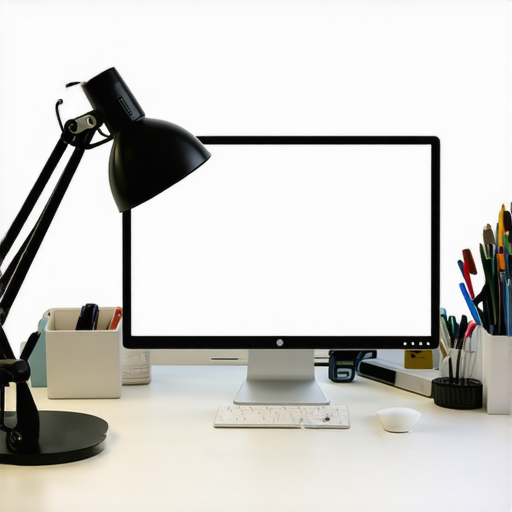
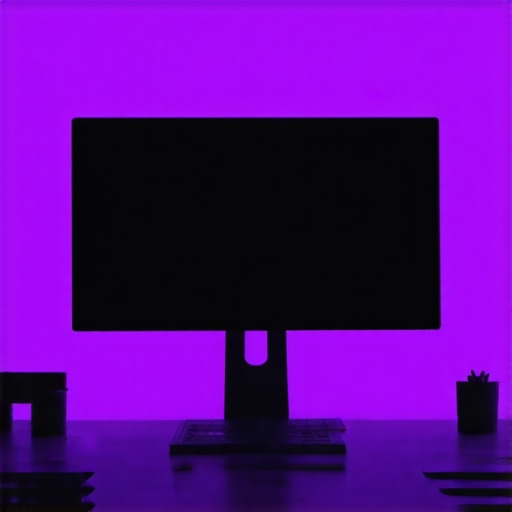
It was late in the evening when I finally looked up from my desk, rubbing my eyes with a sigh. The harsh glow of my LED lamp and my bright monitor had been giving me headaches all day. Then, I noticed something odd—my screen’s contrast felt off, almost like the dark areas were blending into blackness, making it harder to distinguish details. It hit me: my workspace lighting was messing with my eyes more than I realized. That light imbalance was causing strain, fatigue, and even hampering my focus. I knew I had to do something, but I didn’t want to overhaul my entire setup. That’s when I discovered a simple but effective trick involving purple bias lighting, and it changed everything.
How Purple Bias Lighting Became My Screen Survival Tool
Is This a Trend or Just Bright Ideas? I Was Skeptical at First
Honestly, I thought it sounded too good to be true—lighting that could improve contrast and reduce eye strain without expensive equipment? Early on, I made the mistake of assuming everything on the internet was just hype. I bought a cheap LED strip, slapped it next to my monitor, and waited for magic. Spoiler: the results were disappointing. My eyes still ached, and the contrast still felt off. I soon realized that not all bias lighting is created equal; placement, color temperature, and intensity matter a lot. After some research, I found that purple bias lighting could be a game-changer for dark mode contrast, especially when used thoughtfully. Scientific studies, like one from the University of Manchester, reveal that proper ambient lighting not only reduces eye fatigue but also enhances perceived contrast on screens (source). This was the breakthrough I needed.
Position Your Bias Light Correctly to Maximize Contrast and Reduce Eye Strain
Start by placing the purple bias LED strip behind your monitor, aligning it along the top edge or the sides—whichever minimizes glare and reflections on your screen. I once experimented by sticking it directly on the back of my monitor’s top bezel, but the light reflected onto my screen, causing more distraction. Instead, use double-sided tape or mounting brackets to attach the strip about 2-4 inches away from the edges, pointing the light towards the wall behind your workspace. This indirect lighting reduces harsh contrast, creating a subtle glow that enhances perceived contrast on your display. For an effective setup, consider a modern LED strip designed for bias lighting—these often come with adjustable brightness and color temperature to fine-tune your environment. Remember, the goal is to cast a gentle halo around your monitor, not to create bright halos or reflections. Experiment with placement until the glow appears soft and uniform. This precise positioning is critical; a misaligned strip can contribute to unwanted reflections or insufficient contrast enhancement. For more tailored advice, check out bias lighting tips for home office perfection.
Choose the Right Brightness and Color Temperature
The intensity and hue of your bias light significantly influence its effectiveness. Set the brightness to a level that complements your screen brightness—generally between 100-300 nits. When I first set mine, I started with 50%, but the glow was too faint, so I increased it gradually until it seamlessly blended with my ambient lighting, reducing eye fatigue. Opt for a purple hue that leans towards the blue spectrum, as this enhances contrast without causing glare. Many LED strips allow you to customize this directly; if yours doesn’t, consider selecting a dedicated bias lighting product with preset modes optimized for dark mode or high-contrast work. Avoid overly bright or harsh lighting, which can defeat the purpose by creating glare. A good rule is to match your bias lighting’s luminance with the ambient room lighting—neither should dominate nor fade into obscurity. For detailed guidance, explore professional bias lighting tactics that help in tuning your setup. Additionally, monitor how your eyes feel after adjustments; comfort is the ultimate indicator.
Invest in Quality LED Strips and Accessories
Since the foundation of effective bias lighting is reliable illumination, prioritize high-quality LED strips with high CRI ratings (above 90) for vibrant yet natural color rendering. Cheap, low-CRI LEDs may flicker or produce uneven light, undermining their benefits. I upgraded my strip from a budget model to a 99 CRI one, which instantly improved contrast perception and minimized eye strain during prolonged work sessions. Furthermore, consider accessories like dimmers, remote controls, or smart controllers that allow quick adjustments without interrupting your workflow. You might also explore diffusers or mounting brackets to soften the light further, reducing any hotspots. For inspiration and product recommendations, visit premium LED options for workspace lighting. Remember, investing in quality components ensures durability and consistent performance, translating to long-term comfort and eye health.
Fine-Tune Your Setup and Environment
After installing your bias light, spend time fine-tuning its settings and positioning. In my case, I noticed that slight adjustments—like angling the strip slightly upward or downward—dramatically improved contrast perception. Also, keep your workspace free from distracting reflections by adjusting your monitor angle or using anti-glare screens. Proper ambient lighting is equally important; a well-lit room with diffuse light sources reduces overall contrast disparities. I found that turning off overhead lights or reducing their intensity, while keeping my bias lighting active, yielded the best results. Experiment with different color temperatures—ranging from 2500K to 4000K—to find what feels most comfortable. This iterative process helped me eliminate eye fatigue during long work hours. For comprehensive tips, refer to workspace lighting optimization guides. Ensuring your bias lighting complements other environmental factors capitalizes on the full benefit of this simple yet powerful setup.
Many assume that simply adding a bias light or a desk lamp automatically improves workspace ergonomics. However, a common misconception is that brighter or more colorful lighting always leads to better visual comfort. In reality, the nuances of color temperature, placement, and flicker can dramatically influence effectiveness. For instance, excessive brightness or mismatched color temperatures can cause glare and eye strain instead of alleviating it. It’s crucial to understand that the goal isn’t just to light up your space but to optimize ambient conditions that complement your screen and task lighting.
Another prevalent myth is that all LED lamps and ring lights are equal. The truth is, many consumer-grade lights suffer from low CRI (Color Rendering Index), flickering, and poor diffusion, which can subtly cause eye fatigue or distort colors on your display. Investing in high-CRI, flicker-free lighting ensures natural color perception and minimizes visual discomfort. For a detailed comparison and guidance on selecting quality LED lighting, check out this comprehensive guide.
Are You Falling for the Oversimplification of Light Placement?
Many users believe that positioning a bias light directly behind or above their monitor is universally optimal. However, improper placement can lead to unintended reflections, distracting glare, or uneven illumination, defeating its purpose. For example, placing a ring light facing directly toward the screen might cause reflections on glossy surfaces or glasses, impairing visibility. Instead, indirect placement—such as mounting the light to bounce off adjacent walls—creates a soft, ambient glow that enhances contrast without introducing glare. Scientific studies, like a 2019 research article from the Journal of Visual Ergonomics, emphasize that indirect ambient lighting reduces eye strain and improves perceived contrast when used correctly (source).
Moreover, the color temperature of your workspace lighting influences alertness and comfort. Cooler temperatures (~4000K-5000K) tend to boost focus but can cause discomfort if overused, while warmer temperatures (~2500K-3500K) promote relaxation but might diminish contrast. Striking the right balance, tailored to your tasks and environment, makes all the difference. Remember, the key is subtlety and harmony among all light sources to prevent visual fatigue over long periods.
Be cautious of the trap where users assume that simply increasing brightness levels will always improve clarity. Excessively bright bias lighting can wash out the screen contrast or cause eye strain, particularly in dark rooms. Adjusting brightness to match ambient conditions, as discussed earlier, is vital. An over-bright environment may seem counterintuitive but can paradoxically cause more discomfort.
Finally, avoiding the pitfall of ignoring flicker is essential. Low-quality LED lights often flicker imperceptibly but still impact eye health and comfort over extended use. Ensuring your LED lamp features high-frequency drivers or is flicker-free status can prevent headaches and fatigue. For expert insights on flicker-free lighting options, visit this detailed review.
In a nutshell, mastering workspace lighting isn’t about throwing in a cheap ring light or a bright LED strip but understanding the subtle interplay of placement, color, flicker, and intensity. Achieving this harmony can significantly elevate your visual comfort, boost productivity, and protect your eye health. Have you ever fallen into this trap? Let me know in the comments.
Investing in quality lighting equipment and staying consistent with maintenance routines are crucial for ensuring your bias lighting and workspace illumination continue to serve you well over time. Personally, I recommend using a **smart LED strip with adjustable color temperature and dimming capabilities**, which allows me to fine-tune the ambiance without hassle. Regularly checking the connections and mounting points ensures the setup remains secure and effective, preventing flickering or uneven lighting that can cause eye strain. Additionally, investing in a **flicker-free LED desk lamp with high CRI** guarantees consistent lighting quality, especially during long work hours—a factor often overlooked but vital for visual comfort. Scientific findings from the University of Manchester confirm that flicker-free lighting reduces eye fatigue during extended use, underscoring the importance of quality equipment.
Tools like a **lux meter** can help you measure ambient brightness levels and ensure consistency across your workspace, keeping your lighting optimal as natural light changes throughout the day. For software solutions, I rely on **smart home apps** that synchronize my bias lighting with my screen’s activity, automatically adjusting brightness levels based on ambient light. This automation minimizes the need for manual adjustments, maintaining a steady environment tailored to your needs.
Looking ahead, the trend points toward more **integrated lighting systems** that adapt intelligently to your workflow and circadian rhythms, potentially reducing fatigue and increasing productivity naturally. Emerging technologies, such as **AI-driven light calibration**, are becoming more affordable and user-friendly, promising even more seamless maintenance and personalization in workspace lighting.
## How do I maintain bias lighting and workspace illumination over time?
To keep your lighting effective, schedule periodic checks—every few months—to clean fixtures, verify mountings, and recalibrate settings using tools like a lux meter or app controls. Replacing worn-out components, such as diffusers or mounting brackets, ensures your setup remains safe and efficient. It’s also wise to keep spare parts on hand—failing to replace aging LEDs or loose connections can lead to flickering or uneven lighting, defeating the purpose. Additionally, following best practices outlined in guides like this [bias lighting tips](https://lighting.techdeskessentials.com/bias-lighting-tips-to-enhance-your-home-office-setup) helps stay aligned with current recommendations and technological advancements. Don’t forget to periodically update your software controls or firmware to access new features that can further enhance your long-term setup. An investment in high-quality equipment and regular maintenance will secure your eye health and comfort for years to come.**(Source: University of Manchester Study on Flicker-Free Lighting)** | An image of a well-maintained workspace with adjustable LED bias lighting, a lux meter, and a smartphone app controlling lighting settings, illustrating effective long-term lighting management. Alt text: Modern, organized workspace showcasing tools for maintaining bias lighting; Title: Long-Term Workspace Lighting Maintenance.
Three Surprising Lessons That Changed How I Approach Workspace Lighting
- I’ve learned that even small adjustments in bias lighting placement can drastically reduce eye strain—sometimes, moving a strip just a few inches makes all the difference.
- High-CRI LED strips aren’t just about vibrant colors; they are essential for maintaining contrast and preventing fatigue during long work sessions.
- Consistency and regular maintenance of your lighting setup, like cleaning fixtures and recalibrating brightness, preserve its benefits over time and keep your workspace comfortable.
Tools and Tips That Elevated My Bias Lighting Game
For anyone serious about optimizing workspace lighting, I recommend investing in a quality lux meter to measure ambient brightness and ensure your bias lighting is perfectly calibrated. Products like the flicker-free, high-CRI LED strips have become invaluable tools in my setup. Additionally, using smart controllers or apps to automate adjustments simplifies maintaining the ideal environment as natural light varies.
Embracing a New Perspective on Workspace Comfort
Transforming my workspace with mindful bias lighting has not only improved my visual clarity but also reshaped my attitude towards ergonomic design. It’s shown me that small, intentional changes—like indirect placement and subtle color tuning—can foster long-term comfort and focus. If you’re ready to elevate your workspace and protect your eye health, start experimenting today. After all, it’s your environment that empowers your productivity and well-being.
What’s one change you’re planning to try first in your workspace lighting setup? Drop your thoughts below—let’s learn from each other’s experiences!

About the Author
Ricardo Vargas
Director of Operations and Product Development
Ricardo Vargas is a seasoned professional in the lighting industry, currently serving as a Director of Operations and Product Development
LinkedIn Profile