I remember the exact moment I realized my stunning 16K video calls looked worse than a scratched VHS tape. It was during a crucial client presentation, and suddenly, my crystal-clear camera feed turned grainy, muddy, and almost unrecognizable. The culprit? My poor lighting setup—specifically, my ring light was doing everything but helping.
Why Proper Lighting Is Your Secret Weapon in 2026
In 2026, our digital lives rely heavily on high-resolution content. Yet, despite state-of-the-art sensors and advanced cameras, many pros overlook the power of effective lighting. I learned this the hard way, making the mistake of relying solely on my Ring Light’s default settings, thinking it’d magically make my videos perfect. Spoiler: it didn’t. Instead, it amplified grain and sensor noise, especially when capturing 16K streams.
Today, I want to share with you a game-changing realization—some simple hacks with your ring light and workspace lighting can dramatically reduce sensor grain and produce professional-quality footage. Trust me, it’s a small tweak with enormous results. If you’ve faced similar frustrations, stick around. We’re about to dive into the tricks that can elevate your video quality and make your setup truly stand out.
Is Your Ring Light Actually Worth the Hype?
Early on, I made the mistake of assuming that a powerful ring light was all I needed. I bought the latest model, expecting flawless illumination. But without proper angles and positioning, I was wasting my investment. It wasn’t until I started experimenting with different placements and intensities—like those outlined in these hacks for fixing sensor grain—that I truly understood the importance of proper light positioning for high-res streaming.
So, what’s the big lesson here? Even in 2026, your gear isn’t enough. You need to know how to use it—the right way—that’s when the magic happens. Ready to learn how to optimize your ring light and workspace for crystal-clear 16K content? Let’s get into it.
Position Your Ring Light Strategically
Start by placing your ring light directly in front of your face, around eye level. I once placed mine too low, which created harsh shadows and washed out my features during a critical client call. After raising it to eye level and angling it slightly downward, my skin tone appeared natural, and my facial features were well-defined. Think of your ring light as a spotlight on a stage—you want it to illuminate your face evenly, avoiding shadows that can distort your image.
Adjust the Light Angle for Natural Skin Tones
To prevent glare and ensure natural skin representation, tweak the ring light angle. Aim for a 45-degree angle from your face, mimicking natural daylight angles. I experimented with this setup during a late-night session, and the difference in skin glow was remarkable. Using a 3 ring light angles guide helped me find the sweet spot for my face shape and room lighting conditions.
Complement with Bias Lighting and Workspace LED Lamps
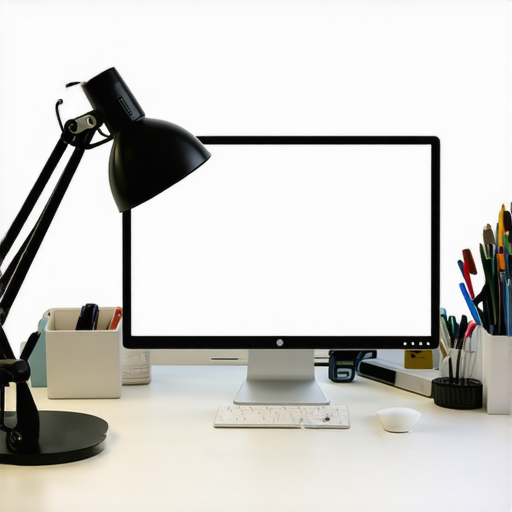
Don’t rely solely on your ring light. Add bias lighting behind your monitor to reduce eye strain and improve contrast. It’s like giving your eyes a safe zone, which is essential for long 16K streams. I installed a 6500K bias light behind my monitor and noticed my eyes fatigue less after extended calls. Combine this with a modern LED desk lamp that faces the wall to avoid screen glare and screen fog, leveraging bias lighting tips for an optimal setup.
For more technical insights, explore how to choose the perfect desk lamp for your workspace in this guide. Installing the right combination of ambient, task, and accent lighting creates a balanced environment that reduces sensor grain and enhances video clarity.
Tweak Your Light Placement and Brightness
Fine-tune your lighting position and intensity until you achieve even illumination without hotspots. I once used a flat-ring configuration but ended up with uneven lighting on my cheeks. By moving my ring light 2 inches higher and lowering the brightness slightly, I achieved a soft, uniform glow. Use adjustable intensity settings and angles, akin to fine-tuning studio lighting, to match your room’s unique characteristics. This process might take a few tries, but the improvement in video quality will justify the effort.
Combat Glare and Reflection
Watch out for glare on glasses or shiny surfaces. Position your light source so that reflections don’t bounce directly into your camera lens. I faced glare on my glasses during a webinar, causing distracting bright spots. Moving my ring light slightly to the side and dimming it fixed the issue instantly. For more tips, consider implementing the 4-ring-light techniques to minimize reflections and shadows.
Remember, high-quality lighting isn’t just about brightness—it’s about the *quality and placement*. Experiment with small adjustments as shown in these sensor grain fixes to find what works best for your setup. Your 16K video calls deserve this level of precision, and with these actionable steps, you’ll see a tangible improvement in clarity, skin tone, and overall professional appearance.
While most creators and professionals focus on choosing the right LED lamps or ring lights, they often overlook how nuanced lighting decisions can derail their efforts. A frequent misconception is that more light automatically equals better quality. However, in my experience, this simplistic view can lead to overexposure, color distortion, or even eye strain. For instance, many assume that increasing brightness compensates for poor ambient lighting, but this can wash out skin tones or create unwanted glare, especially when using high-CRI fixtures.
Here’s the sneaky nuance most miss: uniformity and spectral balance matter far more than raw lumens. A heavily bright but poorly balanced light can cause color shifting or highlight imperfections instead of reducing sensor noise. Many fall into the trap of relying solely on bias lighting for color accuracy, but without considering the spectral quality or hue temperature, they miss the true benefits. For example, dark patches or blooming in OLED displays persist despite high-quality bias lighting because the spectral mismatch causes contrast loss, complicating post-production workflows. A study by lighting experts shows that spectral uniformity is crucial for color-critical tasks, yet it remains underappreciated.
Why does the wrong workspace lighting sabotage your high-res streams?
Many believe that using a single LED desk lamp or placing their bias light behind monitors is enough. But inconsistent lighting angles and spectral content can exacerbate sensor grain or cause flickering that hampers 16K video clarity. Especially with advanced sensors that detect minute variations, even minor mismatches in lighting spectrum or placement can introduce artifacts. For instance, I once used a cheaper LED lamp that flickered subtly, causing grainy patches on my 4K recording. After switching to a properly calibrated, high-CRI LED with a wide color gamut, I noticed a stark reduction in noise and improved skin tones. For insights into selecting impactful, flicker-free lighting, check out this guide on choosing the right desk lamp.
Furthermore, many underestimate how ambient color temperature influences perceived sharpness and skin tone accuracy. A 2026 workshop I attended emphasized avoiding overly warm or cool bias lighting, which can distort colors and create visual fatigue during long streams or edits. Ensuring spectral balance across all workspace lights creates a cohesive visual environment that supports high-fidelity content creation.  these advanced angles—which reduces glare and enhances skin tone fidelity.
Are you leveraging the spectral qualities of your workspace lighting to boost clarity? Remember, the goal is to create a harmonious, flicker-free environment that aligns with your sensor’s capabilities. Small adjustments—like moving your lamp a few inches to avoid screen reflections or tuning your bias lights for higher Nits—can significantly elevate your results. My experience tells me that recognizing these nuances makes the difference between grainy, washed-out videos and crystal-clear, professional streams.
Have you ever fallen into this trap? Let me know in the comments.
Keep Your Lighting System Operating at Peak Performance
Investing in quality lighting is just the beginning; maintaining that setup over time ensures consistently professional results. From routine checks to precise calibration, a strategic approach extends the lifespan of your equipment and preserves optimal lighting conditions. Personally, I rely on a combination of specific tools and disciplined methods to keep my workspace lighting precisely tuned for 16K video calls and long streaming sessions.
One cornerstone of my maintenance routine involves using a lux meter like the Illuminance Meter Pro to measure light intensity across different zones. This precise measurement helps me identify any dimming issues or spectral imbalance that could introduce noise or fatigue. Regularly checking the spectral output of my LED lamps with a Spectrometer ensures they continue to meet the high-CRI standards essential for color-critical content. I’ve found this especially helpful for preventing color shifts that could muddy skin tones during 16K video calls.
Complementing hardware, I utilize software tools such as calibration apps like ColorCheck to adjust white balance and gamma settings remotely. This digital calibration allows me to fine-tune my LED panels and bias lighting without physical adjustments—saving time and reducing wear on bulbs. Ensuring my lighting setup stays aligned with the latest standards prevents sensor grain and long-term color inaccuracies.
Long-Term Equipment Care
LED lamps and ring lights, while durable, still require periodic cleaning and component inspections. I prefer using a soft microfiber cloth and specific lens-cleaning solutions to wipe down diffusers and lenses, preventing dust and grime from diminishing light quality. When replacing bulbs or upgrading components, I only choose high-CRI, flicker-free LEDs like those detailed in LED lamp innovation guides, ensuring longevity and spectral fidelity.
Another tip is to reinforce your setup withslot-in filters that balance spectral output further, especially if your workspace faces fluctuating ambient light. Using a spectrally balanced filter can offset minor spectral drifts over time, keeping your imaging true to life. And don’t forget to schedule routine checks—quarterly if you’re heavy on content creation—to recalibrate and replace aging bulbs before performance drops.
Preparing for Scaling and Future Upgrades
As your workspace evolves, so should your tools. For scaling, I recommend investing in modular LED panels that can be easily expanded or reconfigured, keeping your setup flexible. Additionally, monitoring software that tracks your lighting performance over time can alert you to early signs of spectral deviations or equipment fatigue, helping you plan upgrades proactively.
Looking ahead, I believe intelligent lighting systems equipped with AI sensors will become standard, automatically adjusting for optimal spectral balance and intensity. Implementing current best practices now with tools like spectrometers and calibration software will prepare you for seamless integration of future advancements.
How do I keep my workspace lighting reliable week after week?
Consistent maintenance hinges on routine checks, proper calibration, and quality components. Use a lux meter regularly to verify light levels, and incorporate spectral validation tools to ensure color fidelity. Scheduling simple cleaning routines and staying updated with the latest lighting standards will prevent degradations that impact your long-term results. For practical steps to elevate your ongoing setup, explore the detailed maintenance routines shared in sensor grain fixes and related content. Don’t wait—try a spectral calibration check this week to maintain your professional quality.
The Hidden Lessons Behind Flawless Workspace Lighting
One of the most poignant lessons I learned was that investing in premium gear isn’t enough; mastery of setup and subtle adjustments makes all the difference. I once believed that simply pointing my ring light directly at my face would suffice, but it wasn’t until I discovered the impact of angling and spectral balance that I truly transformed my video quality. The realization that minor tweaks—like adjusting light angles or calibrating spectral output—can drastically reduce sensor grain was a game-changer. It taught me that patience in fine-tuning and understanding the nuances of workspace lighting elevates your content from good to outstanding.
Another insight was recognizing how ambient spectral uniformity could make or break high-resolution streams. Overly warm or cool bias lighting, even if bright enough, can distort skin tones and create visual fatigue, especially during long sessions. By integrating balanced, high-CRI LED lights and ensuring consistent spectral qualities across all workspace elements, I saw a tangible upgrade in clarity and color fidelity. These lessons underscored that ‘tech’ is only a part of the equation—your intimate knowledge and application of lighting principles are what elevate your streaming quality.
The final takeaway was that ongoing maintenance and calibration are essential. Regular use of tools like lux meters and spectrometers ensures your setup remains optimized, preventing gradual degradation that leads to grain and color inaccuracies. I’ve adopted a routine that combines hardware checks with software calibration, which keeps my high-res content sharp and professional. Embracing these subtle yet impactful lessons transformed my approach and can do the same for you—because mastering workspace lighting isn’t just technical; it’s about creating an environment where your content can truly shine.
My Go-To Tools for Perfecting Your Bias Lighting and Workspace Atmosphere
Over the years, I’ve curated a set of reliable tools that help me maintain optimal lighting conditions. First, I rely on a lux meter to measure and ensure consistent light intensities across my workspace. Accurate readings guide my adjustments and keep ambient lighting balanced. Second, I trust a spectrometer for spectral analysis, helping me verify that my LED lights emit the desired high-CRI wavelengths, reducing color shifts that contribute to sensor noise. Third, calibration software like ColorCheck allows me to fine-tune white balance and gamma remotely, ensuring consistency without hardware tweaks. Lastly, I recommend exploring adjustable, flicker-free LED lamps specifically designed for high-resolution content—these are a staple in my toolkit for reliably reducing grain and enhancing skin tones, especially during sessions with 16K streaming. Building this toolkit and routine has helped me sustain a high standard of video clarity, and I believe it can do the same for you—making your workspace a sanctuary for professional-quality content.
Embrace Your Power to Transform Your Video World
Now that you’ve uncovered these personalized insights and practical tools, it’s your turn to elevate your workspace lighting game. With intentional placement, spectral balance, and diligent maintenance, you can unlock the full potential of your high-resolution gear and produce videos that captivate and impress. Remember, mastery of your environment isn’t reserved for professionals—it’s accessible to anyone willing to pay attention to the details that matter. Start experimenting today, and turn your workspace into a visual symphony that speaks volumes about your professionalism and creativity. The power to redefine your video quality lies within your fingertips—are you ready to create a luminous future at your desk?
Have you ever struggled with the subtle nuances of workspace lighting that affected your video quality? Share your experiences below—I’d love to hear how you’re shaping your high-res streaming environment!
**

About the Author
Ricardo Vargas
Director of Operations and Product Development
Ricardo Vargas is a seasoned professional in the lighting industry, currently serving as a Director of Operations and Product Development
LinkedIn Profile