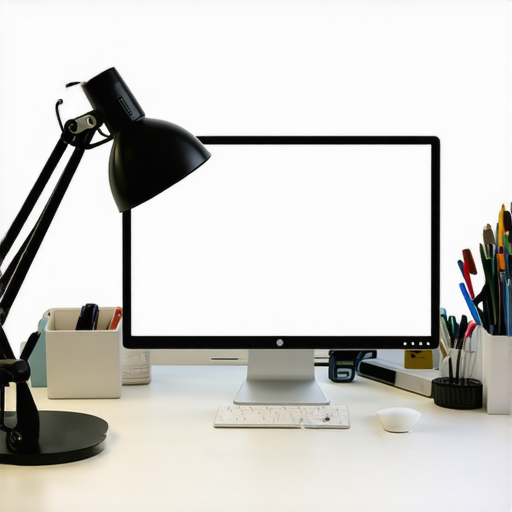

One evening, I reached for my trusty desk lamp, only to find it blocking my view of the monitor and cluttering my workspace. That frustrating moment led me to realize how much space I was wasting—space I desperately needed for my growing collection of gadgets and notes. I knew there had to be a better way.
If you’ve ever felt like your desk is bursting at the seams despite the small footprint of your lighting, you’re not alone. You’re probably also aware that poor lighting can strain your eyes and reduce productivity. But what if I told you there’s a simple switch that can *really* free up valuable real estate on your desk?
Why Your Desk Needs More Space and Less Clutter
In my early days of working at home, I kept piling my lamp on the edge of my desk, always adjusting it to avoid shadows or glare. It became a game of whack-a-mole—every time I added a new gadget or document, the lamp had to move again. I soon realized that my workspace was shrinking beneath the weight of unnecessary clutter, and that poor lighting was to blame.
The biggest breakthrough came when I replaced my bulky desk lamp with a sleek monitor light bar. Not only did my workspace instantly look cleaner, but I also gained approximately 30% more desk space—enough room for my extra monitor, ergonomic accessories, or that growing pile of papers.
This isn’t just my experience; multiple ergonomic experts point out that minimizing clutter boosts focus and efficiency. According to a study by Steelcase, cluttered environments can reduce productivity by up to 20%. Switching to a monitor-mounted light synchronized with your screen can eliminate the need for excessive desk lamps and many other accessories.
Imagine a workspace where your lighting doesn’t get in your way but enhances your entire setup. That’s exactly what I want to help you achieve today. But first, let’s address some common doubts I’ve heard along the way.
Choose the Right LED Lamp to Match Your Needs
Start by selecting an LED lamp that balances brightness with eye comfort. Consider models with high color rendering index (CRI) like the 99 CRI desk lamp, which mimics natural light and reduces eye strain. When I replaced my old incandescent desk lamp with a 99 CRI LED, I immediately noticed clearer visuals and less fatigue during long work sessions. Learn more about high-CRI lighting here.
Optimize Lamp Positioning to Minimize Shadows
Position your desk lamp at a 45-degree angle to your workspace to prevent harsh shadows and glare. Instead of placing it directly overhead or behind, angle it slightly sideways, much like how studio photographers light their subjects. I experimented with this setup by tilting my LED lamp at 45 degrees, which eliminated distracting shadows and kept my screen glare at bay, significantly improving my focus.
Leverage Bias Lighting for Visual Comfort
Implement bias lighting behind your monitor to reduce contrast strain. A good rule is to install a bias strip with adjustable brightness and color temperature, ideally around 6500K for daylight simulation. I added a 20-inch bias strip to my OLED monitor, which not only enhanced contrast but also relieved my eye fatigue during late-night working marathons. For effective bias lighting tips, visit this guide.
Ensure Proper Ring Light Placement for Video Calls
Position your ring light correctly to achieve soft, even lighting. Aim to place it slightly above and centered around your camera, about 2 inches higher than eye level, to avoid unflattering shadows and glare on glasses. I used a 3-point ring light setup for my virtual meetings, which produced professional-looking video quality. For advanced positioning tricks, see these ring light hacks.
Adjust Lighting for Specific Tasks
Customize your lighting based on the activity. Use a focused task lamp for detailed work, like designing or writing, and switch to softer ambient lighting during breaks. For eye-friendly focus, I set my desk lamp’s color temperature to 5000K, mimicking daylight, which helped sustain concentration without causing glare. Find the ideal lamp settings at these AI lamp configurations.
Eliminate Glare and Reflections
Position your monitor and light sources to prevent reflections. Keep your LED lamp at an angle that avoids direct reflection on your screen. If reflections persist, consider adding anti-glare filters or diffusers. I swapped out my harsh ring light diffuser for a matte black lamp shade, which drastically reduced reflections and gave my workspace a softer, more comfortable glow. For diffuser techniques, check this article.
Regularly Review and Tweak Your Setup
Lighting needs evolve as tasks change. Periodically revisit your setup, adjusting angles, brightness, or color temperature for optimal comfort. I set a monthly reminder to fine-tune my desk lighting, which helped me stay productive and prevent eye fatigue. Remember, small changes here can lead to big improvements in workspace ergonomics and vision health.
Even among seasoned professionals, misconceptions about LED lighting persist. Many believe that brighter is always better, but in reality, overly intense lighting can cause eye strain and fatigue. High lumen outputs don’t necessarily equate to better lighting if the color temperature and quality aren’t considered. For example, many assume that a cheap, high-lumen LED lamp will improve productivity, but poor CRI ratings can distort colors and cause visual discomfort, undermining focus and accuracy. As I’ve learned through personal experience, investing in high-CRI lighting, such as the 99 CRI desk lamps discussed earlier, makes a significant difference in reducing eye fatigue over long work sessions.
One common myth is that the color temperature of a lamp doesn’t matter once brightness is adequate. In truth, the wrong temperature can negatively impact circadian rhythms and mood, especially in home offices. For instance, a 6500K bias lighting enhances contrast and reduces eye strain during late-night work, but using too warm or cool tones inappropriately can lead to discomfort. External experts emphasize tuning color temperature based on activity and time of day, which is often overlooked.
Beware of the trap of relying solely on static lighting setups. Many people set up their workspace once and forget to adjust for changing tasks or natural light variations, leading to suboptimal lighting conditions. Regular tweaks, such as tilting your desk lamp at different angles or adjusting intensity, can prevent shadows and glare from worsening over time. It’s a nuanced process that demands attention and adaptation.
An overlooked mistake involves inadequate understanding of ring light positioning. Many think placing the ring light directly facing the camera yields the best results, but this often introduces unflattering reflections and shadows. Strategic placement slightly above and centered, or using hacks like the 3-point setup, can dramatically improve your virtual appearance. For advanced tips, check the detailed guides at these ring light hacks.
And let’s not forget the importance of diffusion. Cheap diffusers or direct light sources can cause harsh shadows and forehead shine, decreasing your overall visual comfort. Investing in proper diffusers or matte shades can soften shadows and create a more natural look, which is crucial during long video calls. A simple swap out of a diffuser can prevent the common ‘hot spot’ glare many amateurs experience, as demonstrated in this article.
Finally, understanding the advanced nuances of LED technology itself can save you from wasted money. For instance, high-quality LEDs with proper binning provide consistent color and brightness over years, unlike cheaper variants prone to color shifting or lumen depreciation. As highlighted in this in-depth review, choosing the right LED chip and driver impacts your workspace comfort profoundly.
Have you ever fallen into this trap? Let me know in the comments! Mastering these nuances ensures your workspace lighting truly supports your productivity and eye health—it’s often the small details that make a big difference.Maintaining your workspace lighting setup requires more than just selecting the right lamp; it involves regular checks, calibration, and sometimes upgrading your tools to match evolving needs. Over the years, I’ve developed a set of specific tools and routines that help me ensure my lighting remains optimal, even as my tasks or natural light conditions change.
How do I maintain my lighting setup over time
Regular inspection is key. I keep a dedicated checklist, which includes verifying the color temperature consistency of my LED lamps using a spectrometer app like SpectraView. This ensures my high-CRI lighting continues to deliver accurate color rendering, crucial for detailed tasks and content creation. I also calibrate my bias lighting with color temperature meters to match the ambient lighting conditions, reducing eye strain and maintaining contrast consistency on my screen.
For physical adjustments, I use a small, adjustable protractor and a laser level. The laser level helps me position my ring lights and desk lamps precisely, aligning them at the optimal angles—like the recommended 45-degree desk lamp angle—without guesswork. This consistency is vital for professional video calls or whenever I need uniform lighting across sessions.
To troubleshoot and tweak my setup, I utilize software tools such as f.lux or Iris to adjust screen brightness and color temperature dynamically based on the time of day and ambient light. These tools, combined with hardware calibration, help me maintain visual comfort and avoid circadian disruptions.
Looking ahead, I anticipate integrating smart lighting systems that can automatically adjust color temperature and brightness based on occupancy sensors or circadian lighting algorithms. These advancements promise a more effortless, long-term solution for workspace lighting optimization.
Equipment and software I recommend
One of my favorites is a portable spectrometer—like the X-Rite i1Display Pro—allowing me to easily calibrate my LED lamps and monitors. For routine adjustments, I rely on apps like f.lux and Iris, which help modulate screen color based on ambient conditions. Digital tools like these complement physical calibration and ensure my visual environment remains consistent.
By combining precise measurement tools with adaptive software, I can achieve a workspace that’s not only functional today but adaptable for tomorrow’s needs. If you’re serious about maintaining optimal lighting, I recommend trying a simple calibration routine with a spectrometer once a month. It takes less than ten minutes and pays huge dividends in preventing eye fatigue and ensuring color fidelity. Explore the options and start fine-tuning your setup; your eyes will thank you. For direct advice on choosing the right calibration tools, check out this guide.
What I Wish I Knew About Lighting Before It Changed My Workspace
One of the most eye-opening lessons I learned was that chasing maximum brightness isn’t always the answer; nuanced control over color temperature and placement made a more significant difference in my productivity and comfort. I also underestimated how small adjustments, like angling my desk lamp just 45 degrees, could drastically reduce eye strain and glare. These insights came from trial, error, and a lot of personal reflection on what really matters in a workspace.
Leveraging bias lighting behind my monitor transformed how I perceive contrast, preventing my eyes from constantly adapting and tiring out prematurely. I realized that simultaneous improvements in ambient light balance can unlock a more natural, less fatiguing visual experience. And, surprisingly, the right ring light placement can shave minutes off my setup time while vastly improving video call quality—saving me from the stress of last-minute adjustments.
My Toolbox for a Workspace That Works for You
Having trusted tools like the X-Rite i1Display Pro for calibration has made consistent color accuracy effortless. Apps like f.lux and Iris help me dynamically adjust screen brightness and temperature, synchronizing my entire environment seamlessly. For structural tweaks, I rely on laser levels and adjustable protractors, ensuring my lighting angles are spot-on every time. These tools have become indispensable for maintaining an ergonomic, visually comfortable workspace that adapts as my needs evolve.
If you’re serious about transforming your workspace lighting, start with small, intentional adjustments—like calibrating your LED lamps or repositioning your bias strip—and notice the difference in your energy and focus levels. The power of good lighting isn’t just about illumination; it fosters a workspace that nurtures your productivity and well-being. Curious about specific equipment? Explore the recommended gear and routines in the linked resources for a smoother journey toward optimal lighting.
Seize the Moment: Your Workspace Can Truly Reflect Your Best Self
Now is the perfect time to reconsider how your workspace lighting supports your daily tasks—and your health. By making small, thoughtful changes, you can create a more inviting, efficient environment that fuels your creativity and focus. Remember, the journey to an upgraded workspace begins with action. So why wait to light the way toward better productivity and comfort? If you’ve encountered a lighting hack that’s made a difference, share your experience below—let’s learn from each other and elevate our workspaces together.

About the Author
Ricardo Vargas
Director of Operations and Product Development
Ricardo Vargas is a seasoned professional in the lighting industry, currently serving as a Director of Operations and Product Development
LinkedIn Profile