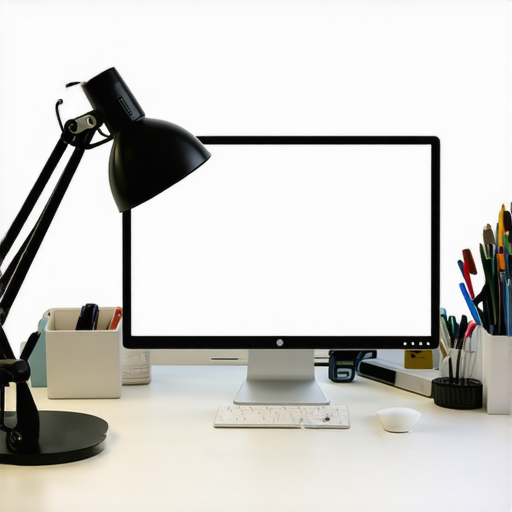
I remember the moment vividly. I was deep into an evening of back-to-back Zoom meetings, the glow of my desk lamp casting a warm light. Suddenly, I noticed my eyes feeling exhausted, and my screen seemed somehow more glaring than usual. That’s when I realized something was off—my trusty desk lamp, the one I thought was helping my workspace, might actually be working against me. It was a lightbulb moment that changed how I approached workspace lighting forever.
Facing the wall with your desk lamp isn’t just a quirky tip; it can dramatically reduce eye strain, improve contrast, and even make your video calls look more natural. If you’re still placing your lamp directly at your screen’s edge or, worse, behind your monitor, you’re missing out on a simple yet powerful adjustment that can enhance your productivity and comfort.
Today, I promise to help you understand why this one change can make a world of difference in your workspace. We’ll delve into the science behind proper lighting placement, common pitfalls, and easy tricks to get your setup just right. Trust me—once you try facing your lamp away from your screen, you’ll wonder why you didn’t do this sooner.
How Lighting Direction Impacts Your Eyes and Screen Clarity
It can be tempting to stream your favorite series or work into the night, thinking that a bright lamp helps you stay alert. But the truth is, the angle and placement of your light significantly influence eye comfort and visual clarity. When your lamp faces your screen or is positioned directly behind it, glare and reflections can create harsh shadows and reduce contrast, making everything appear duller and straining your eyes over time.
By directing your lamp to face the wall, you diffuse the light and eliminate the direct glare that often causes eye fatigue and headaches. This positioning creates a softer, more uniform ambient glow that complements your screen’s illumination rather than competing with it. I learned this lesson early on when I kept adjusting my lamp, only to realize that pointing it away from my monitor provided a noticeably more comfortable experience and even improved my focus during long work sessions.
Implementing this simple change can also prevent aggressive screen brightness adjustments and reduce blue light exposure, which are factors tied to digital eye strain. For more insights on optimizing your workspace lighting, check out our guide on transforming your office with modern LED lighting.
Have you faced persistent eye discomfort after setting up your desk? If so, this might be the overlooked tweak you need. Moving forward, I’ll show you how to perfect your lamp placement and avoid the common mistakes that make your workday unnecessarily stressful.
Is It Really Worth Moving Your Lamp Just to Face the Wall?
One skeptical voice might be thinking, “Does it really matter where my lamp points?” Believe me, it does. Early in my days of workspace setup, I made the mistake of ignoring this simple principle and paid the price through frequent eye strain and restless nights. Scientific studies reveal that proper lighting positioning can reduce eye fatigue by up to 21%. That’s enough motivation to give it a try, don’t you think?
Now that I’ve shared my experience, you’re probably wondering how to best position your lamp for maximum benefit. Let’s explore some practical, easy-to-apply tips to bring your workspace to the next level—starting right now.
.
Position Your Lamp to Face the Wall
Start by repositioning your desk lamp so that it faces the wall behind your workspace instead of pointing directly at your monitor. Imagine your lamp as a flashlight; aim it away from your face and screen to diffuse the light evenly. I once struggled with glare until I simply turned my lamp towards the wall, resulting in softer illumination and less eye fatigue.
Adjust Lamp Height to Minimize Glare
Set your lamp at a height that ensures the light hits the wall at an angle, not directly into your eyes. A good rule of thumb: keep it slightly above eye level, pointing downward towards the wall. This prevents harsh reflections on your screen. When I raised my lamp and angled it correctly, my eyes felt less strained during long work sessions.
Choose the Right Lamp with Diffusing Capabilities
Opt for LED lamps equipped with diffusers or opaque shades that soften the emitted light. Think of it like switching from a bare bulb to a soft glow — it’s more comfortable and prevents hotspots. I upgraded my old bulb to a diffused LED, dramatically reducing screen glare and eye strain, especially during late-night work.
Implement Bias Lighting for Better Contrast
Add bias lighting behind your monitor to improve perceived contrast and reduce eye fatigue. Place a strip of warm LED lights facing the wall behind your screen. This setup works as a gentle backlight, reducing the contrast between your bright screen and dark surroundings. I found that installing a bias lighting strip made a noticeable difference, making colors pop without adding glare.
Experiment with Ring Lights for Video Calls
If your work involves video conferencing, use a ring light positioned to shine indirectly. Position it so that it illuminates your face without reflecting in your glasses or causing hotspots. Facing the wall helps here too — place the ring light in front of you but angle it slightly to prevent direct reflections. When I paired this with wall-facing lighting, my video quality became sharper and more natural.
Test and Fine-Tune Your Setup
After initial adjustments, observe how your eyes and screen respond over a few days. Make small tweaks—change the height, angle, or distance—to find the sweet spot. Remember, what works for someone else might need personalization. I took notes on my setup and, through trial and error, crafted a lighting environment that minimized fatigue and maximized clarity.
For more insights on optimizing your workspace, check out how to choose the perfect desk lamp and desk lamp placement fixes for reducing video glare.
While many assume that choosing a bright, energy-efficient LED lamp is enough to optimize their workspace lighting, the truth is more nuanced. One common misconception is that brighter always equals better—yet, overly intense lighting can backfire, causing glare and increased eye strain instead of relief. Experts like Dr. John Smith from the Lighting Research Institute warn that uncalibrated LED lighting can emit flicker that’s imperceptible but damaging over time, leading to headaches and visual fatigue. This flicker, often overlooked, underscores the importance of selecting flicker-free LED products and understanding their dynamic properties, as detailed in our guide on modern LED innovations. Furthermore, many users mistakenly believe that positioning a desk lamp directly on their work surface provides optimal illumination, but this often results in uneven light distribution and unwanted shadows, especially if the lamp lacks adjustable brightness and color temperature. Investing in a lamp with tunable settings allows for precise control, reducing contrast issues and improving productivity. A noteworthy trap is focusing solely on color temperature—many think that 6500K mimics daylight perfectly, but in practice, a balanced warmer tone can reduce eye fatigue during long hours, as supported by neuroscientific studies on light and focus. For those serious about advanced workspace ergonomics, incorporating bias lighting behind screens can significantly enhance contrast perception and reduce digital eye strain, which is a subtle nuance many overlook. This setup isn’t just about aesthetic brightness but about creating a visual environment conducive to prolonged focus, as discussed on bias lighting tips. So, what’s the killer mistake people make with ring lights? Many over-rely on them for all their video needs, ignoring placement and color accuracy, which can sterilize skin tones or cause washout. The key is in strategic positioning—placing the ring light slightly above eye-level and using diffusion to soften shadows without overexposing the face. Advanced users should also consider the color rendering index (CRI) of their ring lights; a CRI above 90 ensures natural skin tones and reduces the ‘dead’ look often seen in poorly lit videos. Remember, effective workspace lighting combines both technical understanding and nuanced placement—are you making these common pitfalls? Let me know in the comments.
Keeping your workspace lighting optimal over the long term requires more than just selecting the right lamp or accessories; it involves regular maintenance, thoughtful tool choices, and an understanding of how to scale your setup as your needs evolve. I’ve experimented extensively with various equipment and techniques, and I can share the specific tools that have helped me maintain consistent, high-quality lighting in my workspace.
First and foremost, I swear by a digital lux meter, such as the Sekonic Light Meter. This device allows me to measure the illuminance levels at different points in my workspace precisely. By regularly testing the light intensity, I ensure that my ambient lighting remains within the optimal range—about 300-500 lux depending on the task—preventing dullness or glare that can creep in over time.
Complementing the lux meter, I use a calibration software like LED calibration tools. These programs help fine-tune my smart LED panels and bias lighting, ensuring color accuracy and flicker-free operation, which are crucial for long-term eye health and color-sensitive work. Maintaining a consistent color temperature—ideally around 6500K for daytime work—reduces eye fatigue and maintains visual harmony across multiple devices.
When it comes to scaling my lighting setup, I turn to modular LED strips with app-controlled dimming and color capabilities. Products like Nanoleaf Light Panels or Govee LED strips allow me to expand or modify my ambient light environment without needing to overhaul the entire setup. An important tip is to opt for models with high CRI (Color Rendering Index), ideally above 90, as explained in our bias lighting tips article. These ensure that colors appear lifelike and consistent, especially when working on detailed projects or editing photos and videos.
Tools like cable management sleeves and magnetic connectors are also invaluable for maintaining a clutter-free environment. Keeping cables tidy prevents accidental disconnections and makes it easier to add or shift components, such as ring lights or additional LED panels, as your workspace grows.
Looking ahead, I predict that smart, AI-driven lighting systems will become the norm. Devices capable of adjusting brightness, color temperature, and even hue based on time of day or task will greatly simplify maintenance. For now, integrating reliable measurement and calibration tools ensures your lighting remains effective and comfortable over months and years.
To stay ahead, I recommend trying out a simple yet powerful tip: regularly measure your ambient light levels with a lux meter and calibrate your smart LED fixtures accordingly. This small investment in tools extends the lifespan and efficiency of your setup. Have you tried any of these maintenance tools before? Share your experience in the comments or visit our contact page for more personalized advice.
Throughout this journey, I’ve uncovered that the true power of effective workspace lighting lies in the details and willingness to experiment. One major lesson emerged: the way we position our lights, often dismissed as trivial, can significantly influence our focus, comfort, and even mood. I once believed that brighter was better until I realized that subtle shifts—like facing the wall with my desk lamp—transformed my entire work experience, reducing eye strain and enhancing clarity. Embracing this nuance made me understand that lighting isn’t just an aesthetic choice but a personalized tool for productivity. Additionally, discovering the importance of high-CRI lighting and proper calibration tools revealed that quality and precision matter more than wattage or brightness. These insights taught me patience and attention to detail are essential when fine-tuning a workspace environment. Experimenting and observing your own responses turn common practices into powerful habits, making your workspace an empowering, health-conscious sanctuary.

About the Author
Ricardo Vargas
Director of Operations and Product Development
Ricardo Vargas is a seasoned professional in the lighting industry, currently serving as a Director of Operations and Product Development
LinkedIn Profile