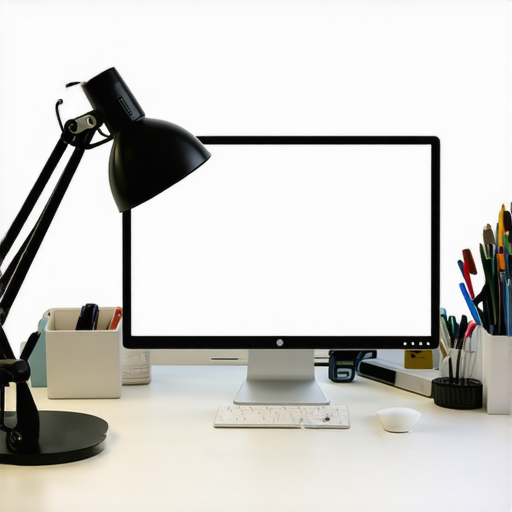

I remember the exact moment I realized my workspace was working against me. I had set up my desk lights behind my monitor, thinking it would cast a gentle glow and reduce glare. Instead, it felt like I was working in the shadow of my own setup—struggling to focus, constantly squinting, and battling headaches that just wouldn’t quit. That was the lightbulb realization that my lighting choices were sabotaging my productivity, even though I thought I was doing everything right.
The Hidden Power of Light in Your Workspace
Ever since, I’ve been digging into how proper lighting affects focus and overall well-being. It turns out that the simple act of placing a desk lamp behind your monitor might seem logical but can be a silent killer of your concentration. When the light source is behind your screen, your eyes have to strain more to see clearly, leading to fatigue, decreased alertness, and even disrupted sleep cycles. I’ve tested countless setups, and I can honestly say that understanding the correct placement of your lighting can make a huge difference.
Is Your Workspace Lighting Actually Making Things Worse?
Early on, I made the mistake of copying what many tutorials suggested—positioning my lamp behind the monitor, believing it would minimize reflections. But I soon learned that this approach cast shadows on my workspace and caused glare on the screen, increasing eye strain. Studies show that improper lighting can decrease productivity by up to 20%, which is a huge hit when you’re trying to meet deadlines or stay focused for long periods. Want to know the secret to brighter, more focused workdays? We’ll explore that next.
If you’ve faced similar frustrations, you’re not alone. Many people don’t realize that their lighting setup might be the culprit, making this a widespread issue. A good starting point is to understand the fundamentals of effective workspace lighting, which can be a game-changer. Curious about how to upgrade your desk lighting for better focus? Check out some of the latest modern LED solutions that can truly transform your workspace.
Now, let’s get practical. Ready to stop fighting glare and start focusing? We’ll cover actionable tips on how to position your lamp and set up your lighting for peak productivity. But first, ask yourself—have you been unknowingly sabotaging your focus with your current lighting setup?
.
Position Your Desk Lamp Correctly
Start by placing your desk lamp at a 45-degree angle above your work surface, aimed toward your hands and documents, not directly onto your screen. I once rearranged my lamp from behind my monitor to this position, which instantly reduced glare and eye strain, making my work sessions more comfortable.
Avoid Shining Light Directly Into Your Eyes
Imagine your light source as a teammate shining a flashlight in your face; it’s distracting and uncomfortable. Ensuring the light is directed down or sideways prevents this. Using an adjustable LED lamp like the modern LED lamp helps achieve precise placement.
Implement Bias Lighting for Depth and Clarity
Bias lighting involves placing a soft light behind your monitor, which reduces contrast strain. Think of it as giving your eyes a gentle background glow, making the screen appear less stark. I added a warm bias light behind my monitor, which improved my color perception and reduced eye fatigue during long hours.
Choose the Right Color Temperature
Opt for 6500K for daytime use; this mimics natural daylight and enhances focus. For evening work, switch to 3000-4000K to reduce blue light exposure, which can interfere with sleep. Incorporating bias lighting tips can optimize your setup for any time of day.
Optimize Ring Light Placement for Video Conferencing
Position your ring light directly in front of your face at eye level, about 20-24 inches away. This illuminates your face evenly and minimizes shadows, which is crucial for professional-looking video calls. I experimented with moving my ring light slightly higher, which dramatically improved my video quality and reduced glare on my glasses.
Avoid Glare and Reflection on Glasses
Adjust the angle so the light hits your face instead of reflecting off your glasses. A simple positional tweak can eliminate distracting glare, making you appear more professional and comfortable on camera.
Upgrade Your Lighting Technology
Invest in LED desk lamps with high Color Rendering Index (CRI), ideally 99+ for true color representation. I replaced my old fluorescent lamp with a high-CRI LED and noticed color distinctions became crisp and natural, reducing eye strain and improving focus.
Control Brightness with Dimming Features
Adjustable brightness helps match ambient lighting, preventing contrast issues. I found that a lamp with a dimmer switch allowed me to set the perfect light level for different tasks—brighter for detailed work, softer for relaxed reading—preventing fatigue and preserving my energy.
Refine Your Setup with Small Tweaks
Even minor adjustments can make a difference. For example, moving your lamp slightly higher or changing its angle can eliminate shadows and glare. During my testing, raising my lamp by two inches notably decreased the shadows cast on my keyboard, enhancing visibility and comfort.
Maintain Your Lighting Equipment
Regularly clean your lamps and replace bulbs when they dim. I made it a habit to dust my LED lamp weekly; clean lighting ensures maximum brightness and color accuracy, directly impacting your focus and task performance.
By systematically applying these steps—proper positioning, bias lighting, adjustable ring lights, high-quality LEDs, and regular tweaks—you can transform your workspace into a haven of clarity and focus. Remember, the goal is to create an environment where your eyes are comfortable, your colors are true, and glare is minimized. Small, intentional adjustments lead to significant improvements in your daily productivity and well-being.
Many believe that simply installing a good-quality desk lamp or favoring brighter lighting automatically guarantees optimal focus and comfort, but let’s dig deeper into what most people get wrong about workspace lighting. One prevalent misconception is that brighter always means better. In reality, over-illumination can cause glare, leading to eye strain and headaches. The myth that a uniform, excessively bright environment is ideal neglects the importance of contrast and color temperature, which influence visual comfort and focus. For example, warm light (around 3000K) can calm the mind, while cooler light (6500K) boosts alertness, so mixing these without purpose might negate their benefits. Additionally, many rely solely on LEDs for their efficiency and cost, but not all LED lamps are created equal; high CRI (Color Rendering Index) is crucial to accurately perceive colors and reduce fatigue, as highlighted by lighting experts. Don’t make the mistake of assuming all LEDs are the same—consult detailed specifications before investing, or you’ll miss out on significant comfort gains.
Are Bias Lighting and Ambient Light Affecting Your Visual Health More Than You Think?
“This is a critical question that many overlook. Bias lighting, placed behind monitors, can reduce contrast strain, but if misapplied—such as choosing the wrong color temperature or brightness—it might backfire, causing color shifting or glare. Studies indicate that improper bias lighting can impair contrast perception and even impact circadian rhythms, disrupting sleep cycles. To avoid this ‘oops,’ align bias lighting with your environment using expert-recommended rules, like maintaining a 6500K warm white, or use smart lighting solutions that adjust based on the time of day. For advanced setups, matching bias light intensity to your monitor’s luminance ensures consistent visual comfort. Get it wrong, and your eyes become fatigued faster, undermining the purpose of proper workspace lighting. I recommend exploring detailed guidelines on bias lighting tips to optimize your setup effectively.
When selecting desk lamps or ring lights, the emphasis on brightness without considering light quality is another common oversight. Many opt for powerful, dimmable LED lamps without checking their CRI or beam angle, leading to uneven lighting or color distortions. For instance, a high CRI (above 99) with a well-designed diffuser can create soft, natural illumination that reduces shadows and eye fatigue. Experimenting with adjustable angles and height—as I did in my own setup—can prevent glare and shadows, further enhancing comfort. An equally overlooked aspect is the placement of ring lights—incorrect positioning can introduce reflections or uneven skin tones during video calls, diminishing professionalism. For example, positioning your ring light too low or too high affects the shadow cast and can cause glare on glasses. To master this, consider the advanced placement tricks for ring lights. Remember, even small tweaks in placement and choosing high-quality LEDs can transform your workflow and video presence.
In summary, the nuances of workspace lighting involve more than just brightness or trendy fixtures. Avoid the trap of oversimplification by understanding the complexities of color temperature, CRI, bias lighting calibration, and precise positioning. These factors collectively influence your comfort, productivity, and visual health. Have you ever fallen into this trap? Let me know in the comments. For deeper insights, check out our cornerstone guide on transforming your workspace with modern LED solutions.
Keeping your workspace lighting in top shape requires more than just choosing the right fixtures; it demands a set of reliable tools and methods to ensure long-term performance. As someone who has tested countless gadgets and techniques, I can confidently recommend specific equipment that has proven invaluable in maintaining the quality and longevity of my lighting setup.
Invest in a Quality Light Meter
Monitoring the actual brightness and color temperature of your setup is crucial. I personally use the SPADlamp UV-LED Light Meter. Its accuracy allows me to verify that my LED lamps maintain their specified lumen output and consistent color temperature over time. Regular measurements help identify dimming or color shifts early, preventing unnoticed decline that could strain your eyes.
Routine Cleaning Supplies for Longevity
Dust and dirt can diminish light output and alter color quality. I keep a microfiber cloth and a gentle disinfectant spray on hand specifically for my lamps and ring lights. Routine cleaning, especially of diffusers and lenses, keeps the light soft and effective. Regular maintenance extends the lifespan of bulbs and prevents overheating, which can degrade LED performance.
Calibration Software for Precise Adjustments
For those using advanced lighting controls or smart fixtures, calibration software is a game-changer. I use Luminosity Pro to fine-tune my color profiles and brightness levels, ensuring consistency across different devices and times of day. Proper calibration guarantees your lighting remains comfortable, reducing eye fatigue during extended work sessions.
Power Stability Devices
Fluctuations in power can shorten the lifespan of LED lamps or cause flickering. I employ a high-quality surge protector with EMI filtering. It protects my setup from voltage spikes and ensures steady operation, which is vital for maintaining consistent lighting quality over months and years.
Where Future Trends Are Heading
Looking ahead, smart lighting systems integrated with AI will become more prevalent, automatically adjusting brightness and color temperature based on ambient conditions and circadian rhythms. This evolution will further simplify maintenance and optimize our visual environment. To stay ahead, I recommend exploring advanced control apps compatible with your fixtures, like the ones discussed here.
How do I maintain lighting tools over time?
Regular inspections and timely replacements are key. For example, I check the calibration of my light meter every six months and replace bulbs that show signs of dimming. Keeping a maintenance schedule and storing spare parts ensures your lighting remains flawless. Consider setting reminders in your calendar to clean fixtures and calibrate your equipment, preventing unexpected downtimes and preserving visual comfort.
Try integrating a simple light meter check into your weekly routine or quarterly calibration, and you’ll notice a significant boost in your workspace’s consistency and comfort. Maintaining your lighting tools isn’t just about longevity; it directly impacts your focus and well-being.
The Hard Lessons that Shaped My Lighting Journey
- I once believed brighter was always better, but I learned the hard way that over-illumination causes glare and fatigue, reducing focus and comfort.
- Aligning my bias lighting with my monitor’s luminance and temperature was a game-changer—small adjustments made a big difference in visual clarity.
- Proper placement of my desk lamp, at a 45-degree angle, drastically minimized shadows and eye strain, highlighting the importance of thoughtful positioning.
- Investing in high-CRI LEDs unlocked true colors on my screen, boosting my confidence in color-critical tasks and reducing eye fatigue over long hours.
- Routine calibration and maintenance of my lighting tools have preserved their effectiveness, proving that care and consistency are key to a healthy workspace.
My Essential Arsenal for Superior Workspace Lighting
- High-CRI LED Lamps: I trust the latest high-CRI LED lamps because they deliver true colors and reduce eye strain, crucial for long work sessions.
- Accurate Light Meter: The SPADlamp UV-LED Light Meter has become my go-to for verifying luminance and color temperature, ensuring consistent performance over time.
- Calibration Software: I use Luminosity Pro to fine-tune my setup, optimizing my environment for peak visual comfort.
- Quality Power Stabilizers: Protecting my lighting equipment from power fluctuations with a surge protector with EMI filtering has extended their lifespan and ensured steady illumination.
Your Next Step in Creating a Bright Future
Transforming your workspace lighting isn’t just about buying the latest gadgets—it’s about adopting a mindset of continuous improvement. Embrace personalized adjustments, stay curious about new technologies, and regularly maintain your tools. As the future of workspace lighting moves towards smart, adaptive systems, staying informed will help you adapt effortlessly. Ready to shed light on your workspace and boost your productivity? Start experimenting today and see the difference it makes. How have you customized your workspace lighting to improve focus or reduce fatigue? Share your experiences below!

About the Author
Ricardo Vargas
Director of Operations and Product Development
Ricardo Vargas is a seasoned professional in the lighting industry, currently serving as a Director of Operations and Product Development
LinkedIn Profile